Understand slot hit frequency, payouts below your stake, and why frequent returns do not guarantee profit. A practical explainer for Uganda.
Yes. A slot can pay frequently while a player still loses money overall. Some payouts may be smaller than the stake, and total returns can remain below total spending.
Understanding slot hit frequency starts with separating a paying outcome from a profitable one. When reading information about slots in Bangbet Uganda’s casino lobby, consider what a published frequency measures and how the game defines a qualifying payout.
What Does Slot Hit Frequency Mean?
Hit frequency describes how often a game produces an outcome meeting its definition of a qualifying payout. It concerns the frequency of those outcomes, rather than the amount returned.
The provider’s definition matters. Check whether the figure includes below-stake returns, which modes it covers, and whether it refers to an entire completed round or another specified event.
For example, NetEnt’s official Starburst specifications list hit frequency separately from RTP and maximum payout. These are different measurements, rather than interchangeable descriptions of winning chances.
A theoretical frequency is never a payout timetable. A hypothetical 25% frequency does not mean every fourth spin must pay. Paying outcomes may cluster, while other sequences may contain several non-paying spins.
Why a Payout Can Still Leave You Losing Money
A displayed payout tells you the amount returned. To understand the financial result, subtract the total stake associated with that outcome.
These examples are hypothetical calculations, not Bangbet’s actual stake limits or a particular game’s payouts.
| Illustrative stake | Payout received | Payout minus stake |
| UGX 100 | UGX 40 | −UGX 60 |
| UGX 100 | UGX 100 | UGX 0 |
| UGX 100 | UGX 250 | +UGX 150 |
In the first example, money returns to the balance, but the player still loses UGX 60. The second outcome breaks even. Only the third produces a positive result for that spin.
A below-stake payout may count as a hit under the provider’s definition. That classification does not turn it into profit.
A payout should be assessed against the total stake. If a spin costs UGX 100 and returns UGX 40, the result is a UGX 60 loss, regardless of any sounds or animations. For broader guidance on interpreting theoretical returns, read Bangbet Uganda’s RTP and house-edge guide.
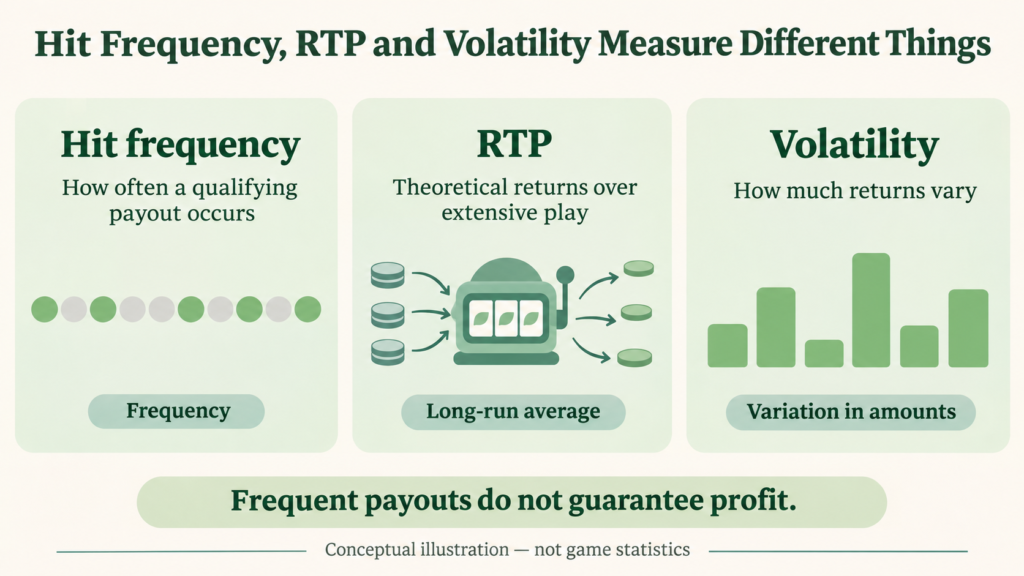
Hit Frequency, RTP and Volatility Measure Different Things
These three terms address separate questions:
| Measure | Question it addresses |
| Hit frequency | How often does a qualifying payout occur? |
| RTP | What proportion of stakes is theoretically returned over extensive play? |
| Volatility | How variable are the game’s returns? |
RTP is a long-run theoretical measure, not the percentage an individual player is guaranteed to recover. Read Bangbet Uganda’s RTP and house-edge guide for the relationship between theoretical returns and the operator’s mathematical advantage.
Provider specifications illustrate the distinction: NetEnt’s official Starburst page lists 23% hit frequency separately from 96.08% RTP. These figures neither guarantee a profitable session. They are provider specifications, rather than confirmation of the configuration available on Bangbet.
Volatility concerns how returns vary in size and distribution. Provider Rectangle Games’ explanation of game mathematics states that games with the same RTP can behave differently during a short session.
Hit frequency alone cannot establish volatility or profitability. Check the exact game’s published information and rules through Bangbet Uganda’s casino lobby, and distinguish how often payouts occur from how much they return.
Can Frequent Payouts Still Produce an Overall Loss?
Yes. Consider this hypothetical session:
| Session item | Illustrative total |
| Total stakes | UGX 10,000 |
| Total payouts | UGX 7,500 |
| Overall result | −UGX 2,500 |
Whether the payouts arrived through several larger returns or numerous small ones, the overall result remains a UGX 2,500 loss.
The number of paying spins cannot establish the financial result without their amounts and the total stakes. Repeated small payouts may make a session feel active while returning less money than was spent.
Total stakes also include money staked again after a payout. They are not necessarily the same as the initial deposit or starting balance.
For this simplified example, the calculation is total payouts minus total stakes. Counting hits alone leaves out the amounts needed to understand what happened.
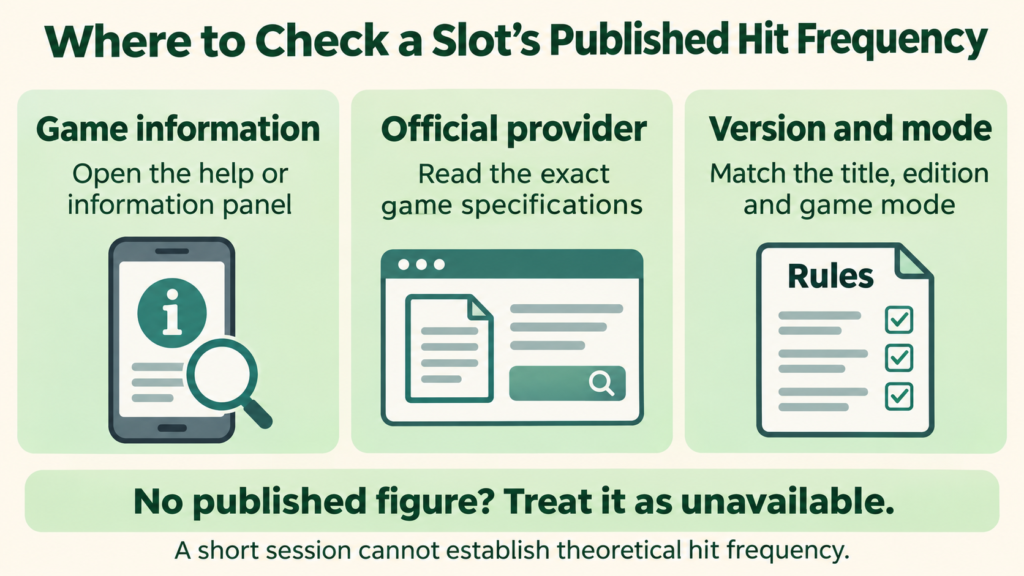
Where to Check a Slot’s Published Hit Frequency
Before relying on a figure, check the exact game’s:
- Information or help panel: Look for mathematical information and definitions.
- Provider’s official specifications: Match the title and edition.
- Rules for the relevant version and mode: Confirm what outcomes the stated figure covers.
Check the exact slot’s information panel and official provider specifications for any published hit frequency. Match the game title, version, and mode. If no figure is published, treat it as unavailable rather than estimating it from a short session.
Common Misunderstandings About Frequent Payouts
- “A payout means I made a profit.” Only an amount exceeding the relevant total stake produces a positive result for that outcome.
- “Frequent small returns make the game profitable.” Their combined value may still fall below total stakes.
- “Several losing spins mean a payout is due.” Earlier losses do not create a countdown to payment in an independent random game.
- “High hit frequency guarantees a successful session.” Frequency does not guarantee payout amounts or session profit.
Rectangle Games confirms that properly functioning independent random outcomes do not depend on earlier rounds.
Frequently Asked Questions
Does a higher hit frequency mean a higher RTP?
No. Hit frequency measures qualifying payout occurrence; RTP concerns theoretical amounts returned relative to stakes. One cannot establish the other without further information.
Can a payout smaller than the stake count as a hit?
Yes, if the provider’s definition includes it. Financially, that outcome still produces a loss because the amount returned is smaller than the stake.
Does hit frequency tell me when the next payout will occur?
No. It is not a schedule, countdown, or signal that a payout is due. A short sequence cannot reliably reveal the next random outcome.
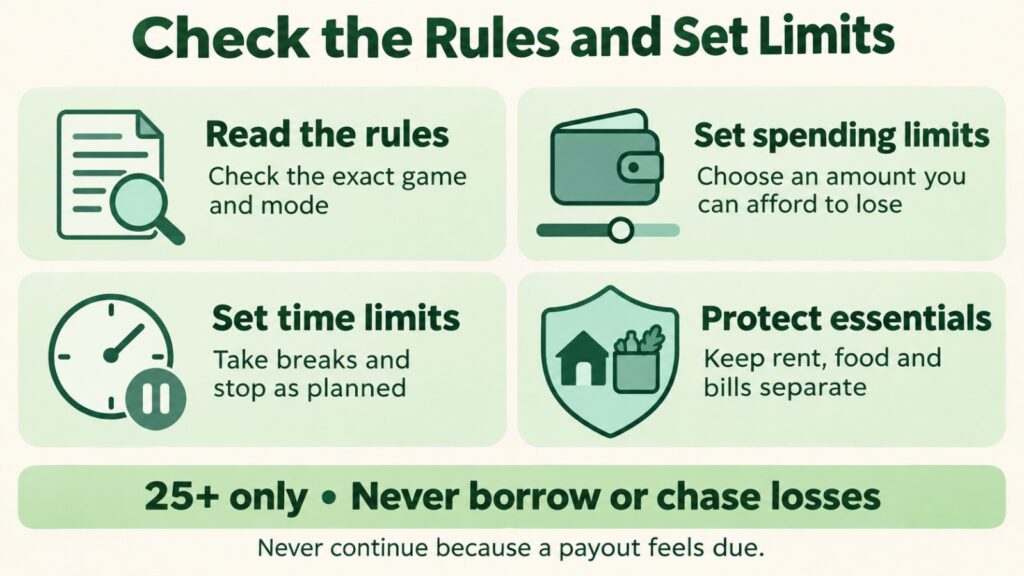
Check the Rules and Set Limits
Before choosing a game in Bangbet Uganda’s casino lobby, read its rules and follow Bangbet’s responsible-gambling guidance, which encourages personal limits, regular breaks, and controlled spending. 25+ only. Protect money for essentials, set time and spending limits, and never borrow or continue because a payout feels due. Gambling should remain entertainment, not a source of income.
Verdict
Hit frequency describes qualifying payout frequency, not profitability. A slot can return money often while total payouts remain below total stakes. Understanding the result requires checking payout amounts, spending, and the relevant game rules. Frequent activity on the screen is not evidence that a player is making money.