Kadiba Stadium has been handed over for a UGX 5.189 billion upgrade. Explore Uganda’s AFCON 2027 venues, CAF deadlines, and community impact.
Uganda’s preparations for the 2027 Africa Cup of Nations have entered an important stage following the handover of Kadiba Stadium for redevelopment into a tournament-standard training facility.
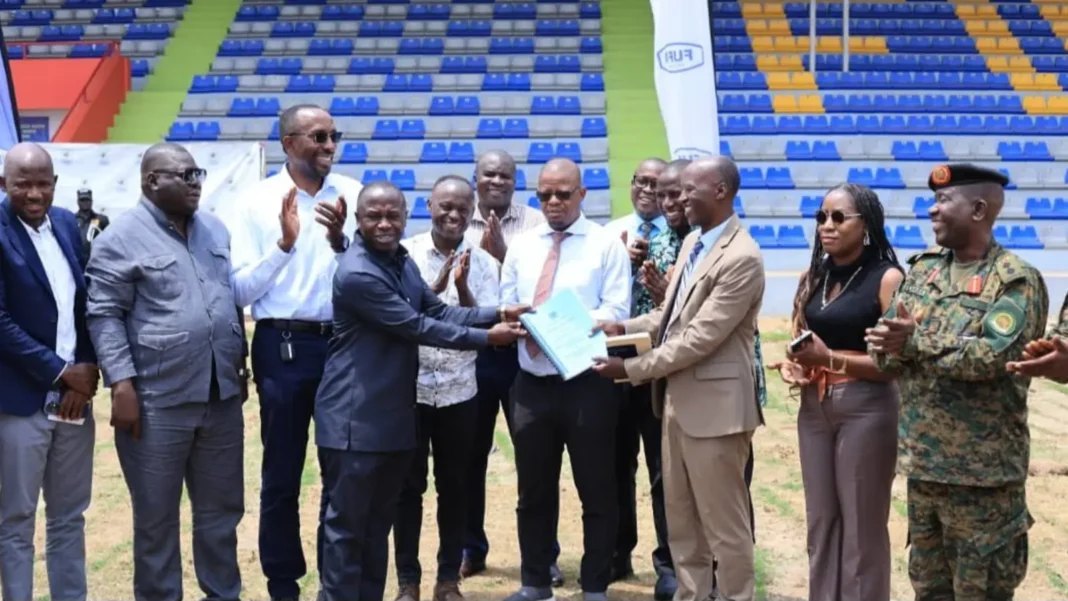
The Federation of Uganda Football Associations formally transferred the Kampala ground to the National Council of Sports on 18 August 2026. NCS then handed the site to the Uganda People’s Defence Forces Engineering Brigade, which will undertake the construction work.
According to Sports Nation Uganda’s Kadiba Stadium redevelopment report, the project is valued at approximately UGX 5.189 billion. Planned improvements include the playing surface, floodlights, electrical installations and information and communications technology systems. FUFA’s official Kadiba handover report also identifies drainage as a priority.
The Kadiba Stadium redevelopment forms part of a wider national programme covering match stadiums, training grounds, transport links, and supporting services ahead of Uganda co-hosting AFCON 2027 with Kenya and Tanzania.
What Is Being Developed at Kadiba Stadium?
The objective is to make Kadiba a dependable training venue that meets CAF’s technical and operational requirements.
The principal works include:
- Installing a standardised natural-grass playing surface.
- Improving the drainage system.
- Upgrading floodlights and electrical infrastructure.
- Improving ICT systems.
- Providing supporting facilities for teams, officials and venue operations.
Kadiba already served as a training facility during the African Nations Championship. The latest project therefore builds on an existing football asset rather than starting from an undeveloped site.
State Minister for Sports Peter Ogwang attended the handover alongside FUFA President Moses Magogo, NCS officials and representatives of the UPDF Engineering Brigade. The engineering team is led by Col. James Lwegaba.
Why Kadiba Matters to Uganda’s AFCON Plan
Kadiba will not stage the tournament’s biggest matches, but high-quality training grounds are essential to delivering a successful continental competition.
Participating teams require safe surfaces for tactical sessions, recovery work and final match preparations. Poor drainage, weak lighting or an inconsistent playing surface can create injury risks and reduce the value of investments made in the main stadiums.
CAF’s inspection process evaluates more than spectator capacity. Its officials examine playing surfaces, safety, security and general infrastructure readiness at match venues and designated training facilities.
Namboole stadium Photo credit (CAF)
Other Ugandan Grounds Being Developed
Uganda’s AFCON programme combines major match venues with training facilities in Kampala and other regions.
Mandela National Stadium, Namboole, remains the principal Kampala match venue and is part of CAF’s inspection programme. Hoima City Stadium is being developed as another host facility serving western Uganda and the Albertine region.
The Akii-Bua Olympic Stadium project in Lira is designed as a wider multi-sport complex. Its signed plans include a 20,000-seat main stadium, athletics facilities, training pitches, an indoor arena, swimming facilities, outdoor courts, a clubhouse and a hostel.
Other reported training-ground projects include Kyambogo, Makerere University, Hoima Boma Grounds, Masindi Grounds, Lira University, Gulu University and Pece Stadium.
FUFA has also called for more investment in Mbarara, Jinja, Mbale and West Nile. This highlights the need to spread Uganda’s sports-infrastructure benefits beyond Kampala, Hoima and Lira.
CAF Timelines Uganda Must Meet
Uganda is now working against specific inspection, construction and competition dates:
- 31 August 2026: A CAF inspection was scheduled to assess infrastructure progress.
- 31 December 2026: Uganda identified this as a deadline for strategic AFCON projects, including training grounds and transport works.
- 21 September–6 October 2026: AFCON qualifying Matchdays 1 and 2.
- 9–17 November 2026: Qualifying Matchdays 3 and 4.
- 22–30 March 2027: Final qualifying matchdays.
- 19 June 2027: Scheduled opening of AFCON 2027.
- 17 July 2027: Scheduled tournament final.
The competition dates are confirmed in CAF’s official AFCON 2027 calendar.
CAF says 48 teams, including the three co-hosts, will participate in qualifying. They will be divided into 12 groups of four, with two teams from each group advancing.
AFCON Is More Than a Stadium Project
Tournament readiness also involves airports, accommodation, public transport, broadcasting, medical services, security and team movement.
FUFA’s summary of the CAF and Pamoja organising meeting outlines plans for accelerated delivery and coordinated regional transport. Uganda has also proposed a common East African visa, which could make movement between the three host countries easier for supporters, media and business visitors.
The Ministry of Works has advertised AFCON-related road projects around Kampala, Kiira and Hoima.
What Does This Mean for Ugandan Communities?
Construction can create jobs and increase demand for materials, transport and professional services. During the tournament, opportunities may emerge in hospitality, catering, logistics, media, security, medical support, branding and event management.
Businesses can monitor FUFA’s official supplier and procurement updates for future opportunities. Selection is not guaranteed and remains subject to CAF policies, procurement procedures and the Host Agreement.
Long-term benefits could include better football surfaces, improved roads, more opportunities for youth development and increased sports tourism. Schools, academies, universities and domestic clubs may also benefit if access remains affordable.
However, these outcomes are not automatic. Facilities must have maintenance budgets, qualified staff and clear community-access programmes after AFCON.
Hoima Stadium Photo Credit (Kawowo)
Why This Development Matters Beyond AFCON 2027
The Kadiba handover represents progress, but success cannot be measured by ceremonies or construction spending alone.
Uganda must complete the work on time, meet CAF standards, protect public value and maintain the facilities after the tournament. Domestic clubs, women’s teams, academies and community programmes should receive reasonable access. Temporary construction jobs should also produce transferable skills and future employment opportunities.
If the venues deteriorate after July 2027, Uganda will have hosted a tournament but missed its biggest opportunity. If they remain active and accessible, AFCON can strengthen the country’s football-development system for years.
Bangbet Uganda and Responsible Play
Adults who choose to include betting in their football viewing can visit Bangbet Uganda’s official platform to check the markets, rules, and conditions available at that time. Odds and markets can change, while no selection, payout, or outcome is guaranteed. This article makes no fixed-odds, bonus, or expected-return claim. Every product and its applicable terms should be verified on the official platform before participation.
Ugandan law treats anyone under 25 as a minor for gambling purposes. Betting is therefore restricted to people aged 25 and above, as explained in the National Lotteries and Gaming Regulatory Board’s official guidance.
Set firm spending and time limits, never borrow to bet and never chase losses. Gambling should not be considered employment, an investment or a solution to financial difficulties. Read Bangbet’s responsible-gambling guidance before participating.
Stop betting if it stops being entertainment. Anyone experiencing difficulty controlling their gambling can reach out to Bangbet’s customer support team and ask for self-exclusion by calling 0768677777 and 0748655151.
Why it Matters
Kadiba Stadium’s UGX 5.189 billion redevelopment is one component of Uganda’s larger AFCON programme, but reliable training grounds are as important as impressive match venues.
For Ugandan communities, the lasting value of AFCON 2027 will not be measured only by the matches. It will depend on whether the investment produces durable infrastructure, regional business opportunities, youth development and accessible facilities that remain useful long after the final on 17 July 2027.