For decades, Juventus have been synonymous with producing and attracting world-class footballers. That legacy remains unmatched, as the Italian giants continue to hold the record for having the most FIFA World Cup winners in the tournament’s history.
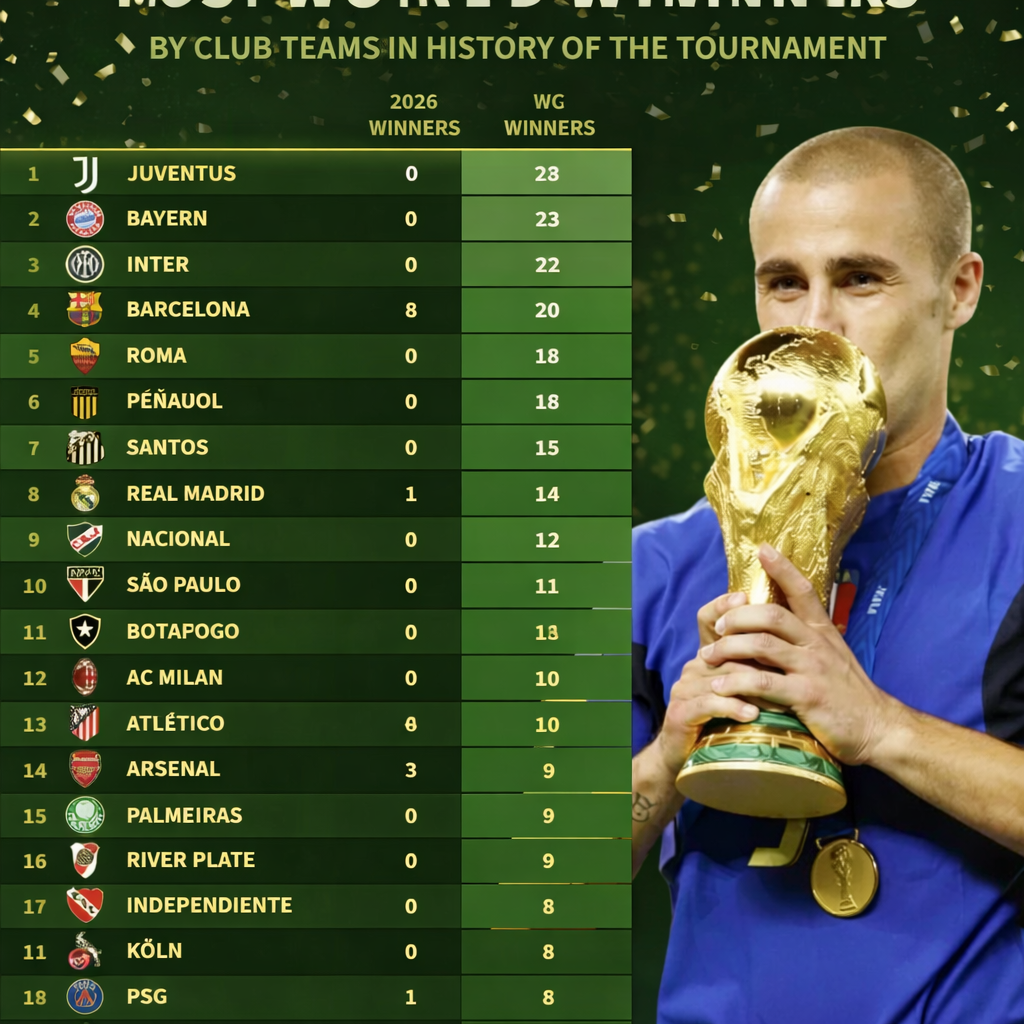
According to the statistics in the provided graphics, Juventus boast 28 World Cup-winning players, ahead of Bayern Munich (23), Inter Milan (22), Barcelona (20), and AS Roma (18).
However, the gap is beginning to narrow.
Following Spain’s triumph at the 2026 FIFA World Cup, Barcelona added eight new World Cup winners to their tally—the highest contribution of any club to the victorious Spanish squad—bringing the Catalan giants within touching distance of Juventus’ historic record.
Juventus Continue to Set the Benchmark
Juventus have long been regarded as one of football’s greatest talent hubs.
Throughout World Cup history, the Turin club has been represented by champions from multiple generations, including legendary Italian sides that lifted the trophy in:
- 1934
- 1938
- 1982
- 2006
In addition, Juventus have signed numerous international stars who later became World Cup winners with their respective countries.
That remarkable history explains why no club has accumulated more World Cup-winning players than the Bianconeri.
Top Five Clubs by World Cup Winners
| Rank | Club | World Cup Winners |
|---|---|---|
| 1 | Juventus | 28 |
| 2 | Bayern Munich | 23 |
| 3 | Inter Milan | 22 |
| 4 | Barcelona | 20 |
| 5 | AS Roma | 18 |
Statistics based on the provided graphics.
Barcelona Make Huge Progress After Spain’s 2026 Victory
The biggest story following the 2026 FIFA World Cup is Barcelona’s dramatic rise.
Spain’s World Cup-winning squad featured eight Barcelona players, giving the Blaugrana one of the largest representations among all clubs at the tournament.
That success increased Barcelona’s all-time total to 20 World Cup winners, placing them just eight behind Juventus.
If Barcelona continue producing elite international talent, they could realistically challenge Juventus’ long-standing record in future editions of the tournament.
Spain’s Golden Generation Boost Barcelona’s Legacy
Barcelona’s renowned La Masia academy has once again demonstrated its importance to international football.
Several members of Spain’s World Cup-winning squad developed at the club before becoming stars for both Barcelona and the national team.
The 2026 triumph reinforces Barcelona’s reputation for developing technically gifted players capable of succeeding on football’s biggest stage.
Bayern Munich Remain Among Football’s Elite
Bayern Munich occupy second place with 23 World Cup winners.
Although they did not add to their total following the 2026 tournament, Bayern’s remarkable history includes champions representing:
- Germany
- France
- Argentina
- Brazil
- Spain
The Bundesliga champions continue to attract many of the world’s finest international footballers.
Inter Milan’s Rich International Tradition
Inter Milan sit third with 22 World Cup winners.
The Nerazzurri have consistently supplied players to successful national teams, particularly Italy’s World Cup-winning generations.
Their place inside the top three reflects decades of excellence in scouting and player development.
Full Top 20 Clubs With the Most World Cup Winners
According to the statistics provided:
| Rank | Club | World Cup Winners |
|---|---|---|
| 1 | Juventus | 28 |
| 2 | Bayern Munich | 23 |
| 3 | Inter Milan | 22 |
| 4 | Barcelona | 20 |
| 5 | AS Roma | 18 |
| 6 | Peñarol | 15 |
| 7 | Santos | 15 |
| 8 | Real Madrid | 13 |
| 9 | Nacional | 12 |
| 10 | São Paulo | 12 |
| 11 | Botafogo | 11 |
| 12 | AC Milan | 10 |
| 13 | Atlético Madrid | 10 |
| 14 | Arsenal | 9 |
| 15 | Palmeiras | 9 |
| 16 | River Plate | 9 |
| 17 | Independiente | 8 |
| 18 | Köln | 8 |
| 19 | Paris Saint-Germain | 8 |
| 20 | Corinthians | 7 |
Real Madrid’s Position May Surprise Fans
One of the more surprising findings is Real Madrid’s ranking.
Despite being the most successful club in European Cup and Champions League history, Los Blancos have accumulated 13 World Cup winners, leaving them outside the top five.
Several factors explain this:
- Madrid have historically signed many players after they became World Cup winners.
- The statistic reflects players who were at clubs when they won the World Cup, not simply legends who played there during their careers.
- Italian and South American clubs dominated the early decades of the tournament, building significant historical advantages.
South American Clubs Continue to Shine
The rankings also highlight the enduring influence of South American football.
Traditional giants including:
- Peñarol
- Santos
- Nacional
- São Paulo
- River Plate
- Palmeiras
- Corinthians
all feature prominently.
These clubs have played vital roles in developing generations of World Cup-winning players for Brazil, Uruguay and Argentina.
Why Juventus Have Stayed on Top
Juventus’ remarkable record is no accident.
Their success has been built on:
Elite Recruitment
The club consistently signed world-class internationals entering their prime.
Italian Dominance
Italy’s four World Cup victories heavily featured Juventus players.
Longevity
For decades, Juventus have remained among Europe’s strongest clubs, attracting football’s biggest talents.
Winning Culture
Many elite internationals viewed Juventus as the ideal destination to compete for domestic and European honours.
Could Barcelona Break the Record?
Barcelona’s rapid rise makes the question increasingly realistic.
With numerous young Spanish internationals emerging through La Masia and the first team, the Catalan club could continue adding World Cup winners over the coming years.
If Spain remain among the world’s strongest national teams heading into the 2030 World Cup, Barcelona may significantly reduce Juventus’ lead—or even challenge for first place.
What This Ranking Really Represents
The ranking is more than just a historical curiosity.
It reflects decades of:
- Elite player development
- Successful recruitment
- International influence
- Sustained excellence
Clubs with high totals have consistently produced or nurtured footballers capable of reaching the sport’s ultimate achievement—lifting the FIFA World Cup.
Conclusion
Juventus continue to stand alone as the club with the most FIFA World Cup winners in history, a testament to their extraordinary contribution to world football.
Yet Barcelona’s eight World Cup winners from Spain’s victorious 2026 squad have dramatically changed the landscape. With the gap now considerably smaller, the race to become football’s ultimate World Cup club may become one of the most fascinating long-term stories in international football.
For now, however, Juventus remain the undisputed kings of World Cup-winning talent.
FAQs
Which club has the most FIFA World Cup winners?
According to the provided statistics, Juventus lead all clubs with 28 World Cup winners.
How many World Cup winners does Barcelona have?
Barcelona now have 20 World Cup winners, following Spain’s success at the 2026 FIFA World Cup.
Which club is second on the list?
Bayern Munich rank second with 23 World Cup winners.
Why did Barcelona’s total increase?
Spain’s 2026 World Cup-winning squad included eight Barcelona players, significantly boosting the club’s historical total.
Does this statistic include every player to play for the club?
The ranking reflects players associated with clubs when they became FIFA World Cup winners, based on the statistics shown in the provided graphics.
Bet With Bangbet
Elevate your sports and gaming experience with Bangbet, your ultimate destination for unbeatable odds, exciting bonuses, fast payouts, and non-stop promos. Whether you are following top-tier football leagues or exploring thrilling casino options, Bangbet provides expert predictions, helpful betting guides, and 24/7 support. Beyond offering a top-tier platform with competitive odds and exclusive rewards, Bangbet is committed to responsible gambling, ensuring you stay in control while enjoying every moment.
Join the winning team today, bet smarter, and turn your passion into profits the Bangbet way!