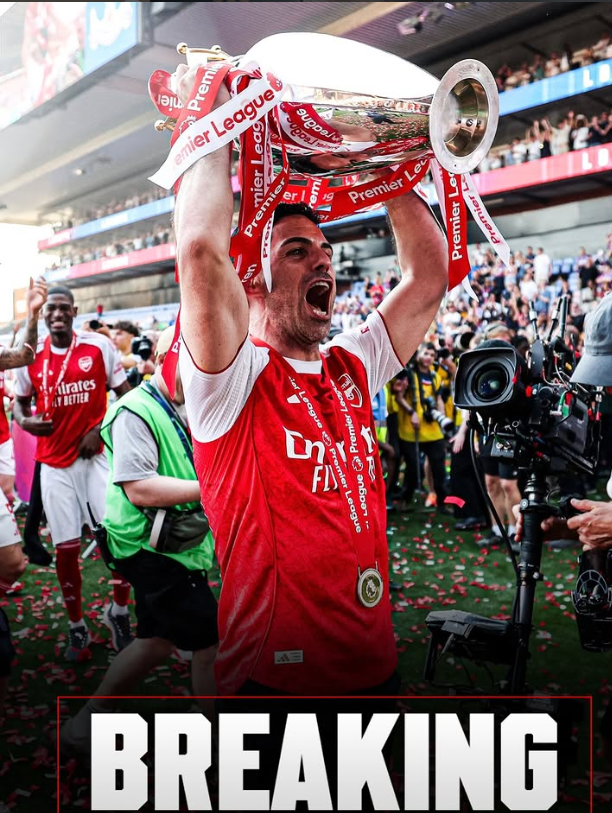
Arsenal’s transformation into Premier League champions and one of Europe’s strongest teams has required major investment in talented players.
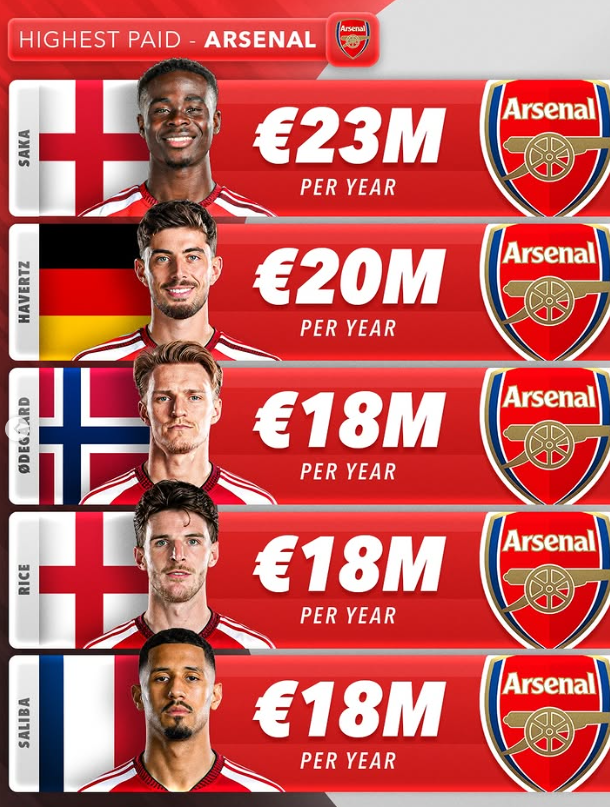
The Gunners’ reported highest earners include Bukayo Saka, Kai Havertz, Martin Ødegaard, Declan Rice and William Saliba. These players form an important part of the team’s attack, midfield and defence, making them extremely valuable to Mikel Arteta’s long-term project.
According to the figures displayed in the image, Saka earns approximately €23 million per year. Havertz reportedly receives €20 million, while Ødegaard, Rice and Saliba are each listed at €18 million annually.
These salaries may appear extraordinary, but Arsenal compete in a global entertainment industry worth billions. Player wages are influenced by performance, commercial importance, transfer value and competition between Europe’s wealthiest clubs.
Arsenal’s Reported Highest-Paid Players
| Player | Reported annual earnings |
|---|---|
| Bukayo Saka | €23 million |
| Kai Havertz | €20 million |
| Martin Ødegaard | €18 million |
| Declan Rice | €18 million |
| William Saliba | €18 million |
These figures should be treated as estimates rather than officially confirmed salaries. Arsenal do not normally reveal the complete financial details of player contracts.
Some salary reports include only guaranteed basic pay, while others add signing fees, loyalty payments, performance bonuses and image-rights income. Currency conversions can also produce different totals.
For example, Saka’s latest Arsenal contract has been reported at approximately £300,000 per week, or more than £15 million per year in basic earnings. The higher €23 million figure displayed in the image may therefore include bonuses and other contractual payments.
Why Bukayo Saka Is Arsenal’s Highest-Paid Player
Saka’s reported position at the top of Arsenal’s salary structure reflects his importance on and off the pitch.
The England international joined Arsenal’s Hale End academy as a child and progressed through the youth system before becoming one of the Premier League’s leading attackers. He provides goals, assists, chance creation and excellent set-piece deliveries from the right wing.
Saka is also a homegrown player and one of the most recognisable faces associated with the modern Arsenal project. His popularity strengthens the club’s connection with supporters while contributing to shirt sales, sponsorship campaigns and international commercial growth.
In January 2026, Saka agreed a new five-year contract expected to keep him at Arsenal until 2031. The improved deal reportedly increased his basic salary to around £300,000 per week, placing him among the highest-paid players in the club’s history. The Guardian reported that Arsenal considered the salary appropriate for his importance to the team.
Allowing Saka’s contract to run down would have created interest from several major European clubs. Arsenal therefore had both a sporting and financial reason to secure his future.
Kai Havertz’s Versatility Makes Him Valuable
Havertz’s reported €20 million annual salary is partly explained by his experience and tactical flexibility.
The German international can play as a centre-forward, attacking midfielder or supporting forward. This versatility allows Arsenal to change their formation and attacking approach without making a substitution.
Havertz can create space, link midfield with attack, compete in the air and score important goals. His willingness to press defenders also makes him suitable for Arteta’s demanding tactical system.
Versatile players reduce the need for a club to sign different specialists for several positions. Arsenal are effectively paying for a footballer who can perform multiple roles during a long domestic and European season.
Havertz also joined Arsenal from Chelsea as an established Premier League and Champions League player. His previous experience and the competition for his signature gave him significant negotiating power when agreeing personal terms.
Martin Ødegaard Provides Leadership and Creativity
Ødegaard is more than Arsenal’s attacking midfielder—he is also the club captain and one of the main organisers of Arteta’s pressing system.
The Norwegian’s technical quality helps Arsenal control possession in tight spaces. His passing, movement and ability to create chances make him essential when opponents defend with several players behind the ball.
Ødegaard also leads Arsenal’s pressing from the front, directing teammates and helping the team recover possession in dangerous areas.
Creative midfielders capable of combining technical quality with tactical discipline are difficult to find. Arsenal would likely have to spend a major transfer fee and offer competitive wages to replace him.
His salary therefore reflects his creativity, leadership and understanding of the club’s playing system.
Why Declan Rice Is Worth an Elite Salary
Arsenal signed Rice from West Ham United in 2023 for £105 million, immediately identifying him as a central figure in the club’s future.
Rice has since demonstrated why Arsenal were prepared to make such a significant investment. He can play as a defensive midfielder, box-to-box midfielder or in a double pivot. His physical strength, ball-carrying, defensive awareness and set-piece delivery provide value in several areas.
During Arsenal’s title-winning 2025/26 season, Rice’s deliveries were a major weapon. The Premier League’s tactical analysis credited his inswinging corners with creating several goals, while also highlighting his ability to perform in three different midfield positions. The Premier League described him as the midfield lynchpin of Arteta’s championship-winning team.
Rice is also an established England international and one of the most marketable English midfielders. His reported salary protects Arsenal’s £105 million investment and reduces the possibility of rival clubs tempting him away.
William Saliba Is One of Europe’s Most Valuable Defenders
Saliba’s reported €18 million annual earnings demonstrate the growing value of elite central defenders.
The Frenchman combines pace, strength, composure and excellent one-on-one defending. His speed allows Arsenal to play with a high defensive line because he can recover when opponents attempt to counterattack.
Saliba is also comfortable receiving the ball under pressure and beginning attacks from defence. Those qualities are vital for possession-based teams.
Arsenal’s defensive strength was central to their 2025/26 Premier League title. The Gunners kept 19 league clean sheets and conceded only 27 goals across 38 matches. Saliba formed the foundation of that defensive record alongside Gabriel Magalhães.
Young centre-backs with Saliba’s physical and technical abilities are rare. If Arsenal attempted to replace him, they could face a transfer fee considerably higher than the value of his salary.
Arsenal’s Growing Revenue Supports Higher Wages
Arsenal can afford elite salaries because the club’s revenue has increased significantly.
Audited accounts for the 2024/25 season showed approximately £691 million in revenue, compared with £617 million during the previous campaign. Arsenal’s total wage bill was around £347 million, representing just over 50% of revenue. PSRwatch’s analysis of Arsenal’s filed accounts also recorded an £81.2 million profit from player sales.
The 2026 Deloitte Football Money League placed Arsenal seventh among the highest-revenue football clubs, estimating annual income of approximately €822 million. That total included €325 million in broadcasting revenue, €314 million in commercial income and €183 million from matchdays. Arsenal’s Money League breakdown showed that the club increased revenue by about 15% in a single year.
Champions League participation, Premier League success and capacity crowds at the Emirates Stadium have helped Arsenal grow into one of football’s biggest financial organisations.
Why Premier League Players Earn Millions
Television generates enormous revenue
The Premier League’s current UK television agreements are worth £6.7 billion across four seasons. International rights add even more money to the competition. The Premier League’s official announcement described the deal as the largest sports media-rights agreement ever concluded in the UK.
Players are the main attraction behind these broadcasting agreements.
Elite talent is extremely scarce
Millions of people play football, but very few possess the ability to perform consistently in the Premier League and Champions League.
Arsenal cannot easily replace players such as Saka, Rice or Saliba. Their rarity increases their market value and bargaining power.
Winning brings additional income
Successful teams receive more prize money, broadcasting payments and sponsorship opportunities. Arsenal’s return to the Champions League and subsequent domestic success significantly increased the club’s income.
Clubs compete for the same stars
Arsenal must compete with Real Madrid, Barcelona, Bayern Munich, PSG and other wealthy Premier League clubs. Offering competitive wages helps the Gunners keep their best players.
Football careers can be short
A serious injury or decline in performance can change a player’s career quickly. Elite footballers have a limited period in which to maximise their earnings.
Players carry major pressure
Footballers are expected to perform in front of millions of supporters while facing constant analysis on television and social media. One mistake can influence a title race or Champions League knockout match.
Stars have commercial value
Leading players attract sponsors, sell shirts and help clubs expand into new markets. A star’s financial value can extend far beyond goals, assists and clean sheets.
Are Arsenal Players Paid Too Much?
Compared with most professions, football salaries appear extremely high. However, wages in professional football are determined by the revenue players help generate and the competition for their services.
Arsenal’s top stars contribute to a business earning hundreds of millions every year. If the club did not pay competitive salaries, rival teams would attempt to sign those players instead.
The challenge is maintaining a sustainable wage structure. Salaries must remain affordable even if Arsenal miss out on the Champions League or experience a period without major trophies.
Arsenal’s reported wage-to-revenue ratio of approximately 50% suggests that the club has increased player investment while keeping overall spending under control.
Arsenal’s Highest Earners Carry the Biggest Expectations
Large salaries bring enormous expectations.
Saka must continue producing goals and assists. Havertz is expected to contribute in several attacking roles. Ødegaard must lead and create, Rice must control the midfield, and Saliba must anchor the defence.
Their wages reflect their importance to an Arsenal team that has returned to the top of English football and now wants sustained success in the Premier League and Champions League.
Supporters can follow Arsenal’s biggest fixtures and explore competitive Premier League and Champions League markets on Bangbet.
Bet responsibly. Betting is available only to adults aged 18 and above. Set a budget and never chase losses.