



Roulette is one of the most recognizable casino games worldwide. Its spinning wheel, numbered pockets and straightforward betting options make it accessible to newcomers, while the variety of wagers gives experienced players plenty to consider.
For Kenyan casino players, however, mastering roulette is less about finding a secret winning formula and more about understanding probabilities, choosing sensible bets and managing your bankroll responsibly. Roulette remains a game of chance, meaning no strategy can guarantee a profit.
This guide explores practical roulette strategies, betting options and bankroll-management principles that Kenyan players can use to make more informed decisions.
How Does Roulette Work?
Roulette revolves around a wheel containing numbered pockets. Players place bets before the dealer spins the wheel and releases a ball in the opposite direction. The pocket where the ball eventually lands determines the winning wagers.
Two versions are particularly important:
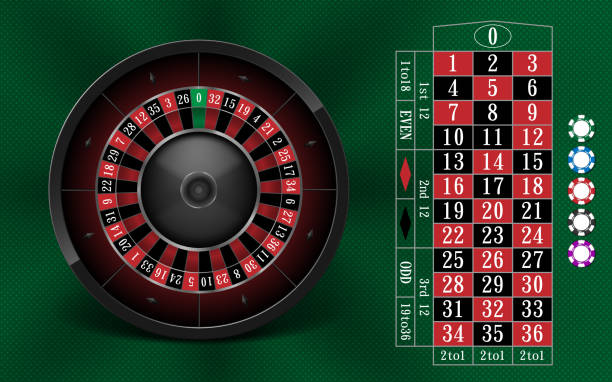
European Roulette features numbers 1–36 plus a single zero (0), giving it 37 pockets.
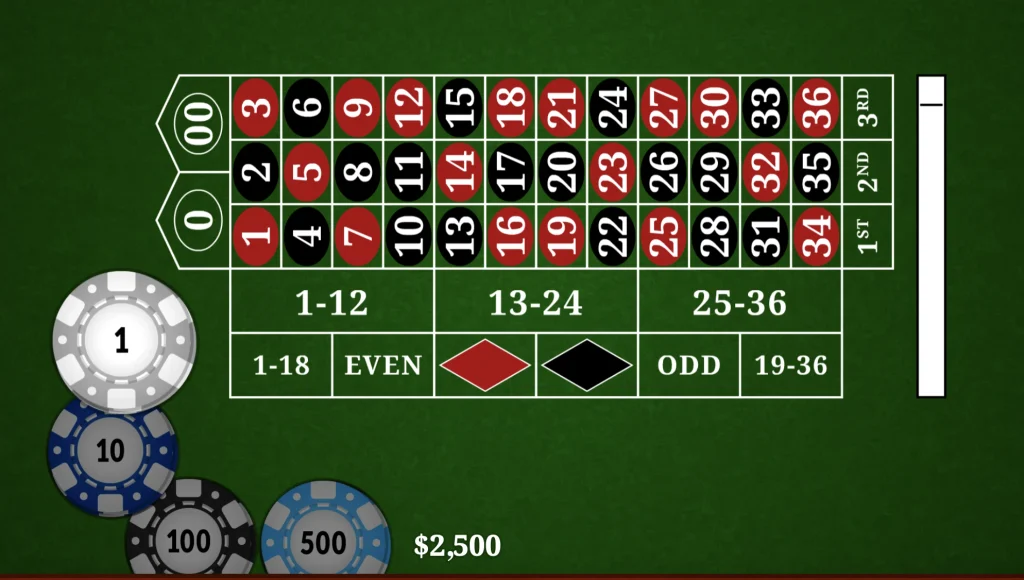
American Roulette adds both 0 and 00, creating 38 pockets.
When both versions are available, European roulette generally offers more favorable mathematical odds because it has only one zero.
Roulette wagers broadly fall into two categories.
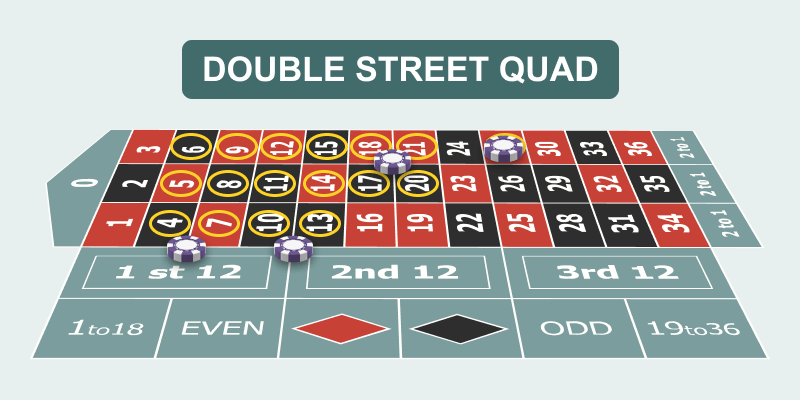
Inside bets cover individual numbers or small combinations of numbers. They offer potentially larger payouts but have a lower probability of winning.
Outside bets cover larger sections of the wheel, including red/black, odd/even, high/low, dozens and columns. Their payouts are smaller, but some offer a comparatively higher chance of success on an individual spin.
1. Understand the House Edge
One of the most useful roulette strategies is also one of the simplest: understand the mathematics before placing a bet.
Every standard roulette game gives the casino a mathematical advantage. A betting pattern cannot permanently eliminate that advantage.
That means players should avoid systems claiming to provide “guaranteed wins,” “secret roulette hacks,” or foolproof predictions. Each legitimate roulette spin is an independent event, and previous results do not determine where the ball must land next.
Understanding this principle can prevent one of the most common roulette mistakes: chasing patterns that aren’t actually predictive.
2. Choose European Roulette When Possible
The number of zero pockets makes a meaningful difference.
European roulette has 37 possible outcomes because it contains a single zero. American roulette has 38 because it contains both 0 and 00.
On standard bets, this translates to a house edge of approximately 2.70% on European roulette compared with 5.26% on American roulette.
For Kenyan players presented with both options, understanding this difference is more useful than searching for complicated betting systems.
3. Start With Simple Outside Bets
Beginners don’t necessarily need to jump straight into single-number bets.
Outside bets can provide a simpler introduction to the game. Popular examples include:
- Red or Black: Betting on the winning number’s color.
- Odd or Even: Predicting whether an odd or even number will land.
- 1–18 or 19–36: Betting on the lower or upper half of the numbered wheel.
- Dozens: Covering 1–12, 13–24, or 25–36.
- Columns: Covering one of the three vertical columns on the table.
Remember that even-money wagers such as red/black are not exactly 50/50 because the green zero—and the double zero on American wheels—affects the odds.
4. Use a Fixed-Bet Strategy
A fixed-bet approach is one of the simplest ways to manage a roulette session.
Suppose your chosen standard stake is KES 100. Instead of dramatically increasing your wager following losses or wins, you continue staking KES 100 while remaining within your predetermined budget.
This doesn’t change the underlying odds, but it makes expenditure easier to track and reduces the temptation to chase losses with increasingly large bets.
For example, a player starting with a KES 2,000 entertainment budget could decide beforehand how much they are comfortable risking and set a maximum stake per spin.
Once you reach the predetermined limit, the session ends.

5. Be Careful With the Martingale Strategy
The Martingale is perhaps roulette’s most famous betting system.
Its basic principle is to double an even-money wager after every loss, with the intention that an eventual win recovers previous losses and generates a small profit.
It may look convincing on paper, but it has a major problem.
Losing streaks happen.
If a player starts at KES 100, consecutive losses would theoretically require stakes of KES 200, KES 400, KES 800, KES 1,600 and increasingly larger amounts.
Bankroll limitations and casino table limits mean the progression cannot continue indefinitely. The strategy also does not change roulette’s mathematical house edge.
Martingale should therefore never be mistaken for a guaranteed winning system.
6. Understand Other Popular Roulette Systems
Several other systems are frequently associated with roulette.
Fibonacci Strategy
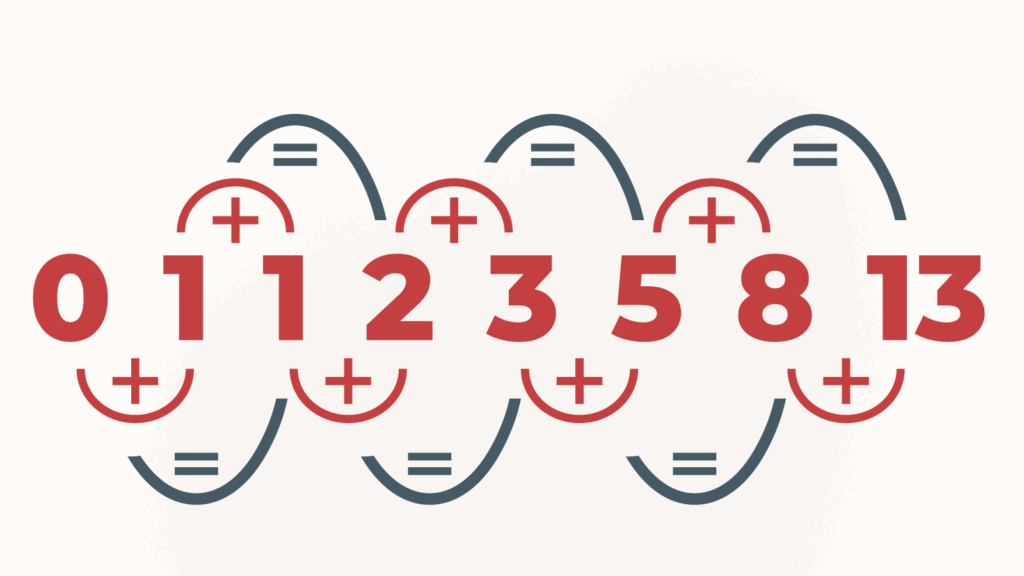
This system follows the Fibonacci sequence — 1, 1, 2, 3, 5, 8, and so forth — to determine stake sizes based on results.
D’Alembert Strategy
Instead of doubling after a loss, the D’Alembert approach generally increases the stake by one unit after a loss and reduces it after a win.
Reverse Martingale
Sometimes called Paroli, this approach increases stakes after wins rather than losses.
These systems can provide structure to how someone manages bets, but there is an important distinction: betting systems manage staking patterns; they do not predict roulette outcomes or remove the house advantage.

7. Set a Roulette Bankroll Before Playing
Make bankroll management part of the plan before the first spin.
Decide exactly how much money you’re prepared to spend on entertainment and avoid using money allocated to essentials such as rent, food, transport, school fees, or bills.
It can also help to establish:
A session budget: The maximum amount available for the entire session.
A stake limit: The maximum amount placed on an individual spin.
A time limit: How long the roulette session will last.
A stopping point: When you will walk away rather than trying to recover previous losses.
This approach keeps roulette in its intended place—as entertainment rather than a source of income.
8. Don’t Chase Roulette Losses
A sequence such as:
Red – Red – Red – Red – Red
doesn’t mean Black is “due” next.
This misconception is known as the gambler’s fallacy.
Likewise, losing several spins doesn’t mean increasing your next wager will improve its probability of winning. A previous loss does not create an obligation for the wheel to produce a favorable outcome afterward.
Avoiding loss-chasing is therefore one of the most important habits a roulette player can develop.
Play Roulette Online With Bangbet Kenya
Kenyan players looking to explore online casino entertainment can visit Bangbet, where eligible users can access casino games alongside Bangbet’s sports betting offering. Players can explore available roulette and casino options on their mobile phone or computer, using account tools designed to help them manage their play.
Always check the current game rules, minimum and maximum stakes, promotions and applicable terms before participating. Online gambling in Kenya operates under the country’s regulatory framework, overseen by the Gambling Regulatory Authority.
Responsible Roulette Play in Kenya
Kenya’s current gambling framework includes the Gambling Control Act, 2025, while the Gambling Regulatory Authority oversees the sector. The framework includes provisions on online casino licensing and player protection.
Roulette should always be treated as paid entertainment. Set limits, never borrow money to gamble, don’t chase losses and take breaks when gambling stops being enjoyable.
18+. Gamble responsibly.
Final Thoughts: Can You Really Master Roulette?
No strategy can guarantee consistent roulette winnings. The wheel remains random, and the casino retains a mathematical advantage.
What players can master is how they approach the game.
Understanding European versus American roulette, knowing the house edge, selecting bets you understand, maintaining a predetermined bankroll and recognizing the limitations of systems such as Martingale can lead to more informed play.
For Kenyan roulette players, the smartest strategy isn’t trying to outsmart a random wheel. It’s understanding the odds, controlling your stakes and knowing when to stop.