The 2025/26 European club season delivered another remarkable goalscoring race, but one striker finished well clear of the rest.
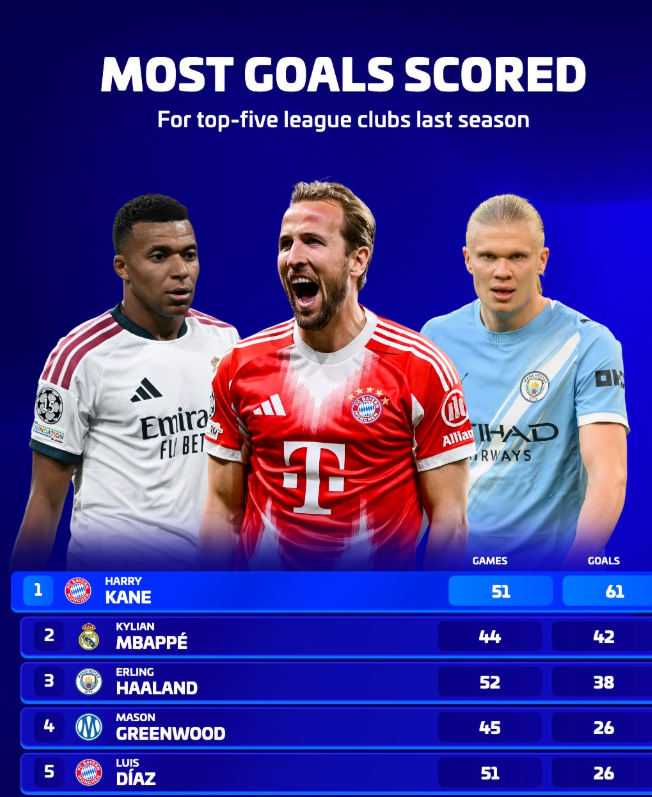
Harry Kane scored an extraordinary 61 goals in 51 appearances for Bayern Munich, placing him ahead of Kylian Mbappé, Erling Haaland, Mason Greenwood and Bayern teammate Luis Díaz among players representing clubs in Europe’s top five leagues.
The numbers in the accompanying graphic cover club matches in all competitions. They show Kane on 61 goals, Mbappé on 42, Haaland on 38, Greenwood on 26 and Díaz on 26.
Goals do not tell the entire story of a season, however. Trophies, assists, decisive performances in major matches and international tournaments all influence the Ballon d’Or vote.
With the 2026 ceremony scheduled for October 26, which of these five goalscorers has the strongest case?
Top Five Scorers for Top-Five League Clubs
| Rank | Player | Club in 2025/26 | Games | Goals | Goals per game |
|---|---|---|---|---|---|
| 1 | Harry Kane | Bayern Munich | 51 | 61 | 1.20 |
| 2 | Kylian Mbappé | Real Madrid | 44 | 42 | 0.95 |
| 3 | Erling Haaland | Manchester City | 52 | 38 | 0.73 |
| 4 | Mason Greenwood | Marseille | 45 | 26 | 0.58 |
| 5 | Luis Díaz | Bayern Munich | 51 | 26 | 0.51 |
Goals-per-game figures are rounded to two decimal places and cover club competitions only.
1. Harry Kane: 61 Goals in 51 Bayern Munich Games
Harry Kane produced the defining goalscoring campaign of the European season. Sixty-one goals in 51 Bayern appearances gave him an average of approximately 1.20 goals per match—an astonishing rate maintained across domestic and European competition.
Kane scored 36 Bundesliga goals to win the European Golden Shoe. He also supplied seven assists in all competitions, demonstrating that he remained more than a penalty-box finisher.
His movement, passing and ability to drop into deeper positions continued to connect Bayern’s attack. Defenders could not simply mark him inside the penalty area because he could move into midfield and create opportunities for runners around him.
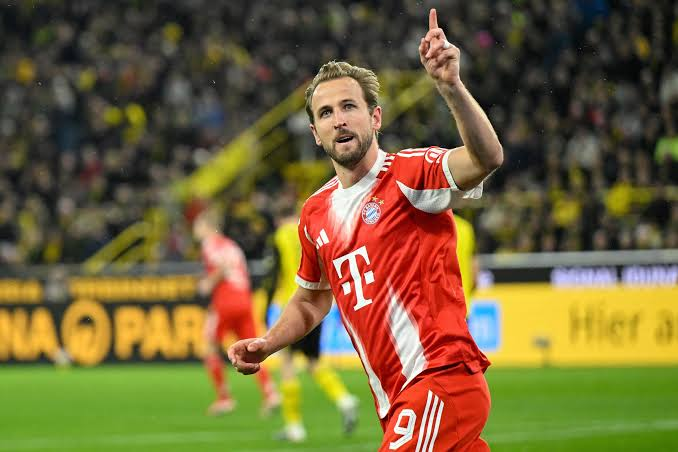
Most importantly for his Ballon d’Or case, the goals contributed to team success. Bayern won the Bundesliga and DFB-Pokal double and reached the Champions League semi-finals. Kane finally combined a historic individual campaign with major trophies.
His performances for England strengthened the argument further. Kane scored six times at the 2026 World Cup as England made a deep run in the tournament.
Although Ballon d’Or voting is not determined solely by statistics, 61 club goals, domestic trophies and major international contributions create an exceptionally powerful case.
2. Kylian Mbappé: 42 Goals in 44 Real Madrid Games
Kylian Mbappé remained one of football’s most devastating scorers, recording 42 goals in only 44 appearances for Real Madrid. His rate of approximately 0.95 goals per match was the closest to Kane among the five players.
Mbappé won the Pichichi Trophy after scoring 25 goals in LaLiga. He was also the Champions League’s leading scorer with 15 goals, proving his ability to deliver against elite European opposition.
His acceleration, movement behind defensive lines and ruthless finishing made him Madrid’s most dependable attacking outlet. He could score in transition, cut inside from the left or operate centrally against deep defensive blocks.
The weakness in Mbappé’s Ballon d’Or argument is collective success. Real Madrid ended the club season without a major trophy.
Individual honours such as the Pichichi and Champions League top-scorer award carry significant weight, but the Ballon d’Or criteria also reward collective achievements.
Mbappé deserves to finish high in the voting. However, when compared directly with Kane, he scored 19 fewer club goals and did not have the same domestic trophy return.
3. Erling Haaland: 38 Goals in 52 Manchester City Games
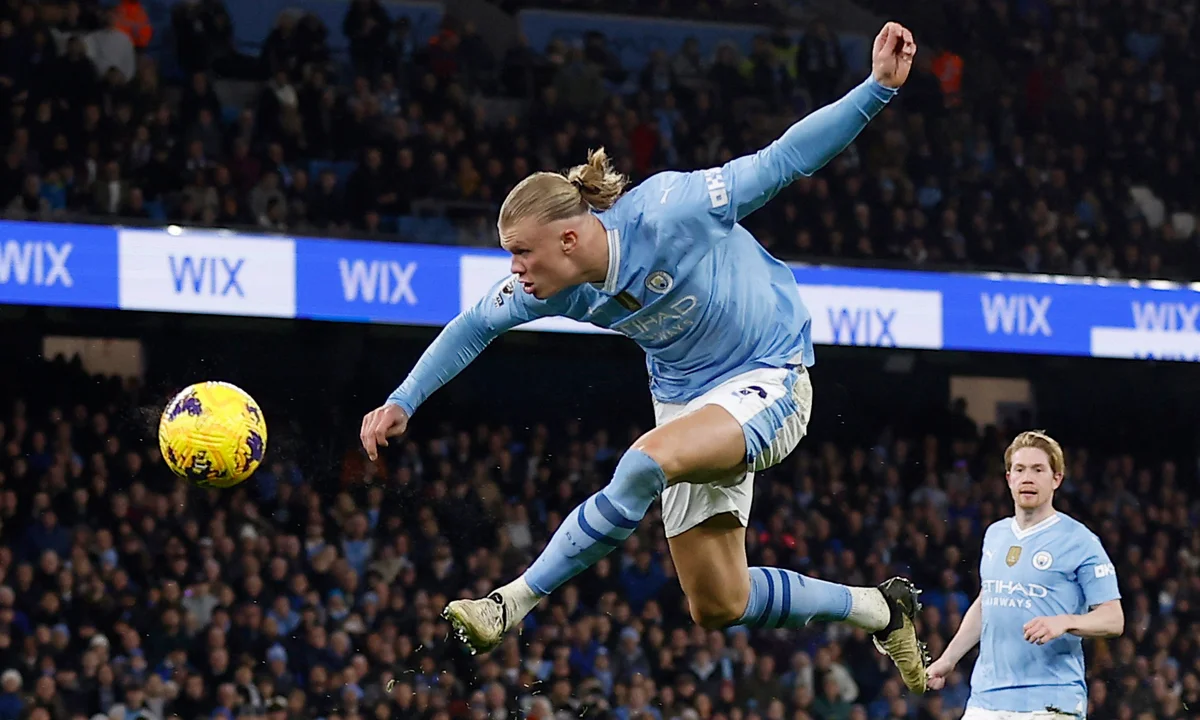
Erling Haaland’s 38 goals in 52 appearances would represent a spectacular season for almost any centre-forward. His average of approximately 0.73 goals per match again placed him among Europe’s most reliable finishers.
Haaland remained Manchester City’s central penalty-area threat. His strength, pace and intelligent movement forced opponents to defend closer to their goal, creating space for City’s attacking midfielders and wide players.
Manchester City won both the FA Cup and Carabao Cup, giving Haaland a strong trophy platform. His official City profile credits him with 38 goals across all competitions during the campaign.
Despite those achievements, Haaland’s total was considerably lower than Kane’s and four goals behind Mbappé’s.
His Ballon d’Or candidacy is credible, but he was not the most dominant scorer of the season and did not produce the same defining individual campaign as Kane.
4. Mason Greenwood: 26 Goals in 45 Marseille Games
Mason Greenwood quietly produced one of the most productive seasons of his career. He scored 26 goals and supplied 11 assists in 45 appearances for Marseille, giving him 37 direct goal contributions.
Greenwood scored 16 times and registered seven assists in Ligue 1. His campaign included a four-goal performance against Le Havre—the first four-goal display by a Marseille player in a Ligue 1 match since Jean-Pierre Papin in 1991.
His ability to shoot with either foot, receive possession in tight spaces and attack from wide or central positions made him difficult to contain.
Greenwood was not simply finishing chances. He was also creating opportunities for teammates and carrying a major share of Marseille’s attacking responsibility.
However, he was not included on the 30-man shortlist for the 2026 Ballon d’Or. His lower goal total, limited team honours and the strength of the wider field leave him outside the serious award conversation, even though his club campaign deserves recognition.
5. Luis Díaz: 26 Goals in a Transformative Bayern Debut Season
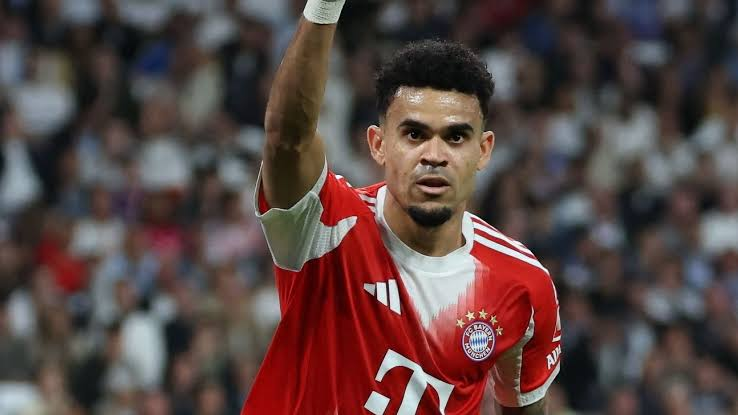
Luis Díaz matched Greenwood’s 26-goal total but offered a different attacking profile.
In his first Bayern Munich season, the Colombian winger recorded 45 goal involvements across 51 appearances, combining his 26 goals with 19 assists.
Díaz brought acceleration, aggressive pressing, one-on-one dribbling and creativity to Vincent Kompany’s attack. He could stretch opponents on the left, attack the penalty area without the ball and create chances for Kane and Bayern’s other forwards.
His spectacular effort against Union Berlin was voted Bayern’s Goal of the Season. More significantly, he helped the club win the Bundesliga and DFB-Pokal during an outstanding debut campaign in Germany.
Díaz is included on the 2026 Ballon d’Or shortlist—and deservedly so. His combination of goals, assists, trophies and tactical influence makes him one of the season’s leading wingers.
Nevertheless, competing with Kane, his own teammate, may divide recognition for Bayern’s success. Kane’s record-breaking scoring output is also extremely difficult to overlook.
Should One of These Players Win the 2026 Ballon d’Or?
Yes. Based on club performance, Harry Kane has the strongest Ballon d’Or case among the five players in the graphic—and arguably the strongest individual statistical case in the entire field.
The Ballon d’Or voting criteria consider three main areas:
- Individual and decisive performances
- Collective achievements and trophies
- Class and fair play on and off the pitch
Kane meets the first two criteria emphatically. He scored 61 club goals, won the European Golden Shoe, helped Bayern claim a domestic double and added six World Cup goals for England.

Mbappé is his closest rival from this group because of his 42 goals, Pichichi Trophy and Champions League Golden Boot. Haaland won two domestic cups with Manchester City, while Díaz combined elite creative output with Bayern’s double.
Greenwood’s season was impressive, but he is not among the official nominees.
The wider contest is more complicated. Lamine Yamal and Rodri have powerful cases following Spain’s World Cup victory, while several PSG players are being recognised following another strong Champions League campaign.
Major international tournaments frequently influence Ballon d’Or voting heavily. The 2026 World Cup could therefore shift votes towards the leading Spanish performers.
Even with that competition, Kane’s season should not be reduced to a collection of simple finishes. Maintaining more than a goal per game across 51 appearances requires fitness, consistency, movement and elite decision-making.
He also delivered the trophies critics previously said were missing from his career.
Final Verdict: Harry Kane Deserves the Ballon d’Or
All five forwards enjoyed excellent seasons, but they did not produce equal Ballon d’Or cases.
Mbappé was brilliant without major club silverware. Haaland remained prolific and won two cups. Greenwood carried Marseille’s attack, while Díaz became one of Europe’s most productive all-round wingers.
Kane combined everything: the highest goal total, the best scoring rate, a domestic double, the European Golden Shoe and major international contributions.
If the award is intended to recognise the most decisive and consistently outstanding player across the complete season, Harry Kane deserves to win the 2026 Ballon d’Or.
Follow Europe’s Biggest Football Stories with Bangbet
Football supporters can follow the latest fixtures, team news, player statistics and available betting markets on Bangbet.
Compare recent form, injuries and confirmed line-ups before making a selection. Always establish a betting budget and wager only with money you can afford to lose.