What It Means for Dutch Football
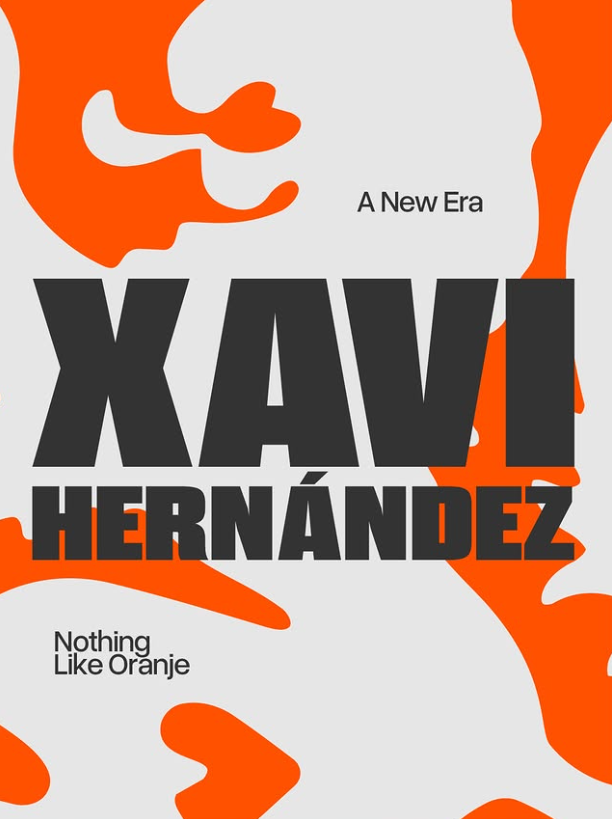
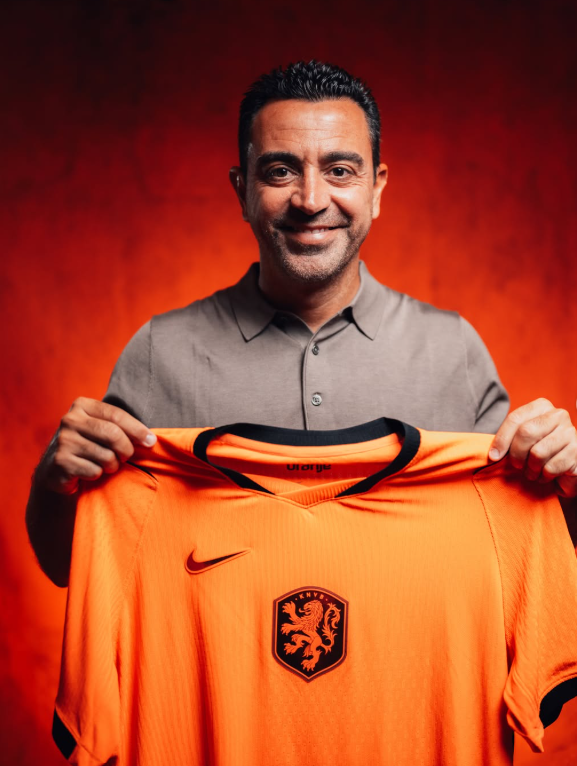
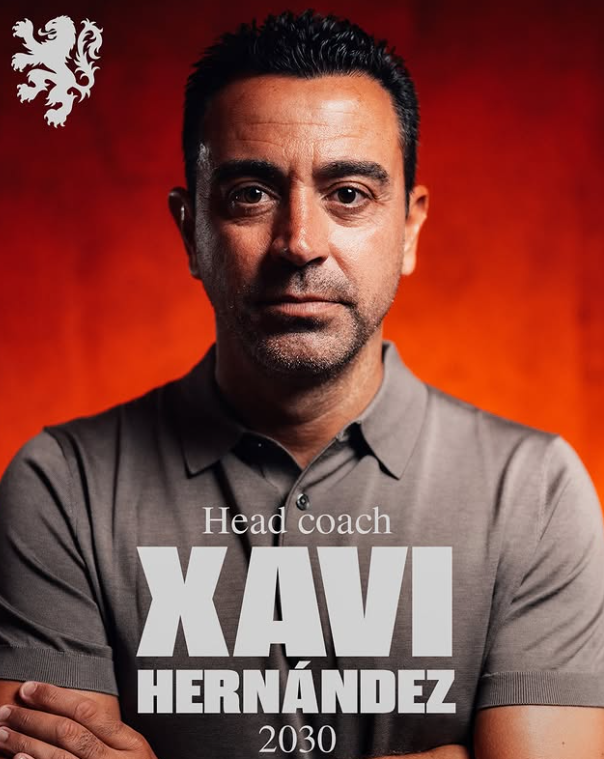
Xavi Hernández has been appointed as the new head coach of the Netherlands national team, beginning a major new era for Oranje following Ronald Koeman’s departure.
The 46-year-old former Barcelona coach has agreed a contract running through the 2030 FIFA World Cup, giving the Dutch Football Association (KNVB) a long-term project covering the build-up to Euro 2028 and the following World Cup.
For the Netherlands, it is an appointment carrying both risk and considerable intrigue. Xavi has never previously managed a national team, but few foreign coaches have arrived with a football philosophy so closely connected to the traditions associated with Dutch football.
Why did the Netherlands appoint Xavi?
The Netherlands entered a period of transition after the 2026 World Cup.
Oranje finished top of Group F unbeaten but were eliminated by Morocco in the Round of 32. The match finished 1-1 before Morocco advanced on penalties, bringing the Dutch campaign to an unexpectedly early end.
Koeman subsequently stepped down as national-team coach.
The KNVB therefore faced a bigger question than simply finding a replacement: what direction should the national team take over the next four-year cycle?
Xavi represents a clear philosophical choice.
The former Spain midfielder built his football education at Barcelona, where Dutch ideas have played an enormous historical role. Johan Cruyff’s influence on Barcelona’s playing identity is particularly significant, while Xavi also developed during an era shaped by coaches including Louis van Gaal and Frank Rijkaard.
Speaking after his appointment, Xavi described taking charge of the Netherlands as an enormous honour and highlighted that connection with Dutch football.
He said his Barcelona education, influenced by figures including Cruyff and Rinus Michels, had created a special relationship with the Dutch game.
Xavi went as far as describing himself as “somewhat of a son of Dutch football.”
That statement helps explain why the appointment is not quite as unusual as Xavi’s nationality initially makes it appear.
A historic foreign appointment for Oranje
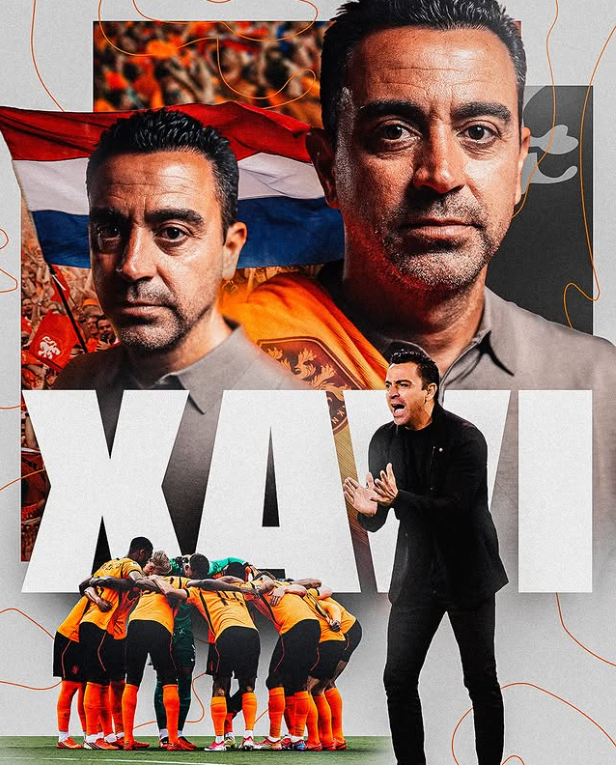
Xavi’s arrival also breaks with a long Netherlands tradition.
He becomes the first foreign coach to take charge of the Dutch men’s national team in 48 years, since Austria’s Ernst Happel led the Netherlands at the 1978 World Cup.
That makes the decision especially significant.
The KNVB has traditionally looked toward its own extensive coaching system and former Dutch internationals when appointing the national-team manager.
Choosing Xavi suggests the federation is prepared to look beyond nationality when the football philosophy fits.
It also aligns with a wider period of ambition within Dutch football. The KNVB’s 2026–2030 strategy includes winning major tournaments and developing world-leading youth football among its major objectives.
Xavi now becomes an important part of delivering that ambition at senior international level.
What style could Xavi bring to the Netherlands?
This is where the appointment becomes particularly interesting.
Xavi’s preferred football principles overlap significantly with the traditional Dutch emphasis on technical ability, positional structure and attacking football.
His teams generally want to control possession rather than simply react to opponents.
The likely principles include:
- Building attacks patiently from defence
- Creating numerical superiority in midfield
- Maintaining positional width
- Pressing quickly after losing possession
- Controlling matches through the ball
- Giving technically gifted midfielders significant responsibility
- Using intelligent movement to create spaces between defensive lines
Xavi himself has spoken about the Netherlands’ tradition of attacking football based on possession, creativity, passion and conviction.
The important question is whether those ideas can be successfully transferred from club football to international football.
At Barcelona, coaches work with players almost every day.
International managers receive considerably less training time.
Xavi will therefore have to simplify his positional concepts without removing the principles that make his football distinctive.
Frenkie de Jong could become central to Xavi’s Netherlands
One player immediately stands out when considering how Xavi could construct his Netherlands team: Frenkie de Jong.
Xavi already knows the midfielder from their time together at Barcelona.
That familiarity could become valuable.
De Jong’s ability to receive possession under pressure, progress the ball through midfield and control tempo makes him an obvious candidate to become one of the tactical foundations of Xavi’s Oranje.
The Netherlands also possess several players suited to a possession-oriented system.
The current talent pool includes midfield options such as Tijjani Reijnders, Ryan Gravenberch and Teun Koopmeiners, alongside attacking players including Cody Gakpo, Memphis Depay, Justin Kluivert and Donyell Malen.
Defensively, players such as Virgil van Dijk, Micky van de Ven, Nathan Aké and Jorrel Hato provide different qualities for constructing attacks from the back.
Xavi is therefore not inheriting a rebuilding project without talent.
His challenge is to create a coherent system that gets more collective value from that talent.
Could Xavi restore the Dutch football identity?
That could ultimately define his tenure.
Dutch football has historically been associated with tactical innovation.
Rinus Michels helped develop Total Football. Cruyff carried many of those ideas into his coaching career, most famously at Barcelona. Barcelona subsequently refined that positional approach across generations.
Xavi became one of its most recognisable midfield symbols.
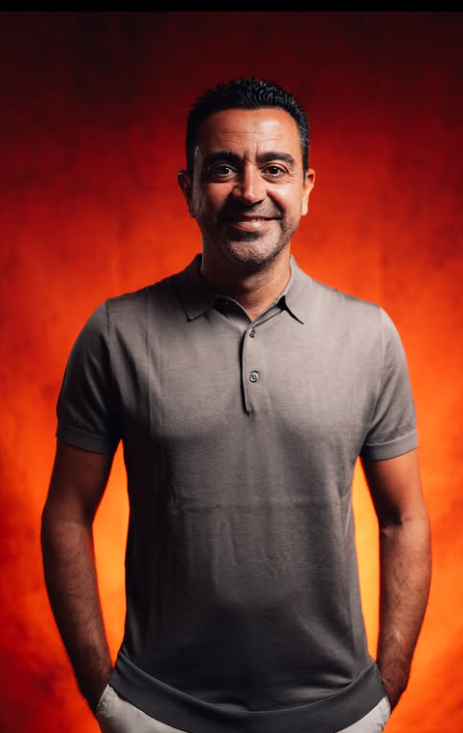
There is consequently an unusual circularity to his Netherlands appointment.
A Spanish coach whose football identity was heavily influenced by Dutch thinkers is now being asked to lead the Dutch national team.
For supporters who want Oranje to combine results with recognisable attacking football, that connection could make Xavi particularly appealing.
However, philosophy alone will not determine whether the appointment succeeds.
Tournament football rewards adaptability.
The Netherlands will still need defensive organisation, physical intensity, set-piece strength and the ability to win matches when possession football is not producing opportunities.
Xavi’s biggest test may therefore be finding the balance between Dutch football ideals and international tournament pragmatism.
Xavi’s Barcelona record shows both promise and risk
The appointment is not without questions.
Xavi began his coaching career with Al-Sadd in Qatar before returning to Barcelona as head coach in November 2021.
His biggest achievement came during the 2022/23 season, when Barcelona won La Liga. He also won the Spanish Super Cup.
That demonstrated his ability to build a title-winning domestic side.
His Barcelona tenure was nevertheless more complicated in European competition, and he eventually left the club in 2024.
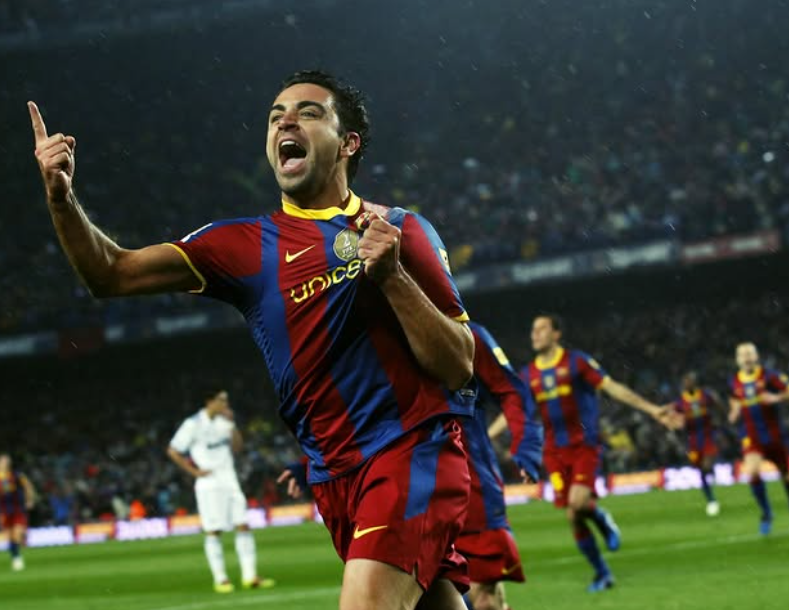
The Netherlands job therefore represents a different challenge.
There are fewer matches, less time on the training pitch and greater pressure around major tournaments.
But there is also an advantage: international football may allow Xavi to focus more heavily on tactical structure and player selection without dealing with the continuous transfer-market and squad-management pressures associated with Barcelona.
Euro 2028 becomes the first major target
Although Xavi’s contract extends through the 2030 World Cup, Euro 2028 should provide the first major measurement of the project.
The tournament gives him roughly two years to establish his preferred system and determine which players can form the core of his team.
It could also accelerate a generational transition.
Experienced figures will have to be balanced against younger players emerging before 2028 and 2030.
That means Xavi’s task is not simply to select the strongest Netherlands XI available today.
He must construct a squad capable of developing across an entire four-year cycle.
His first competitive matches will therefore matter beyond individual results. They should begin revealing which formation, midfield structure and attacking combinations he believes can take Oranje forward.
The 2030 World Cup is the bigger project
A contract running through the 2030 World Cup gives Xavi something international coaches do not always receive: time.
The KNVB appears to be thinking beyond one qualifying campaign.
That creates an opportunity to establish a consistent playing identity, introduce younger players gradually and develop tactical continuity between tournaments.
It also places significant expectations on Xavi.
The Netherlands remain one of international football’s most famous nations never to have won the men’s World Cup despite reaching three finals.
By 2030, success will therefore be measured by more than attractive possession statistics.
Oranje will expect to compete seriously for major trophies.
A fascinating historical twist
There is another remarkable element to Xavi’s appointment.
He was part of the Spain team that defeated the Netherlands in the 2010 World Cup final in Johannesburg.
Sixteen years later, he is now responsible for trying to take Oranje toward the trophy that has repeatedly escaped them.
The symbolism is difficult to ignore.
Xavi once stood between the Netherlands and football’s biggest prize.
Now the KNVB is trusting him to help the country chase it again.
What Xavi’s appointment means for Netherlands football
Ultimately, Xavi’s arrival represents more than a change of manager.
It signals a willingness from the KNVB to make a bold international appointment while attempting to reconnect the national team with football principles historically associated with the Netherlands itself.
There are legitimate questions.
Xavi has never managed international football. His Barcelona spell contained significant highs but also difficult periods. And implementing detailed positional football with limited national-team training sessions will require adaptation.
But the potential upside is equally obvious.
He inherits a technically strong squad, knows important players such as Frenkie de Jong, understands the positional football tradition shaped partly by Dutch coaches, and has been given a contract long enough to build toward two major tournaments.
The Netherlands have effectively placed a four-year bet on football identity.
If Xavi can combine his Barcelona education with the best qualities already present in Dutch football, Oranje could develop into one of Europe’s most tactically fascinating national teams before Euro 2028 and the 2030 World Cup.
And perhaps the most interesting part of the appointment is that the man charged with restoring a recognisable Dutch style is not Dutch at all.
He is a product of what Dutch football helped create elsewhere.