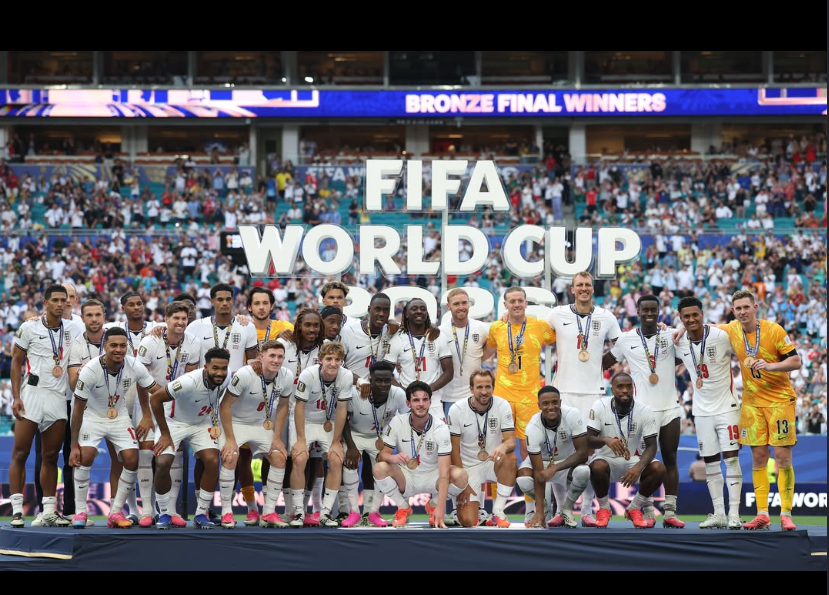
England’s 2026 FIFA World Cup bronze medal represents much more than consolation for missing the final. The Three Lions’ remarkable campaign, completed by an extraordinary 6-4 victory over France, provided convincing evidence that Thomas Tuchel has transformed England into one of international football’s most dangerous and resilient teams.
England travelled to the tournament dreaming of lifting the trophy. Although a painful 2-1 semi-final defeat to Argentina ended that ambition, the response against France revealed the character developing within Tuchel’s squad.
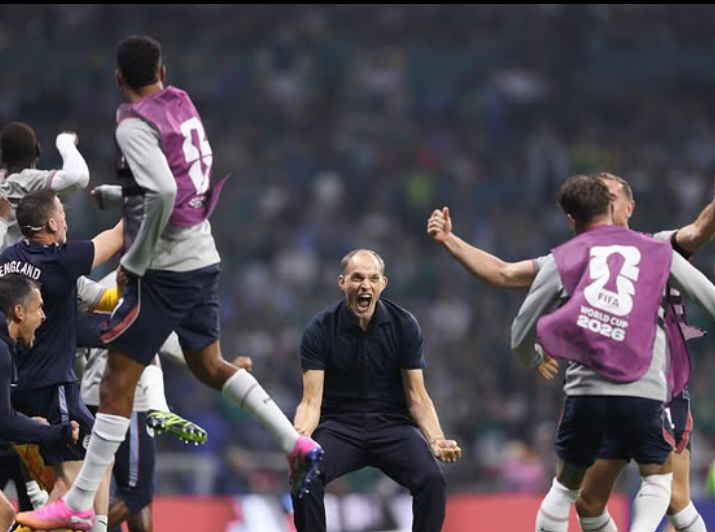
Rather than allowing their disappointment to define the tournament, England attacked the bronze-medal contest with intensity, raced into a four-goal lead and eventually survived an astonishing French comeback.
Bukayo Saka completed a memorable hat-trick, while Declan Rice, Ezri Konsa and Jude Bellingham also scored as England secured third place with one of the most dramatic victories in World Cup history.
France 4-6 England: A Bronze-Medal Match for the Ages
Third-place matches can sometimes struggle for intensity because both teams enter them shortly after suffering the disappointment of losing a semi-final. England and France produced the complete opposite.
The match became an end-to-end spectacle filled with goals, records, momentum swings and outstanding individual performances.
France vs England goal scorers
| Team | Goal scorers |
|---|---|
| France | Kylian Mbappé 48’, 66’; Bradley Barcola 54’; Ousmane Dembélé 90+6’ |
| England | Declan Rice 3’; Ezri Konsa 18’; Bukayo Saka 37’, 45+1’, 87’ penalty; Jude Bellingham 90+8’ |
England started with remarkable aggression. Rice opened the scoring after only three minutes before Konsa doubled the advantage with his first senior international goal.
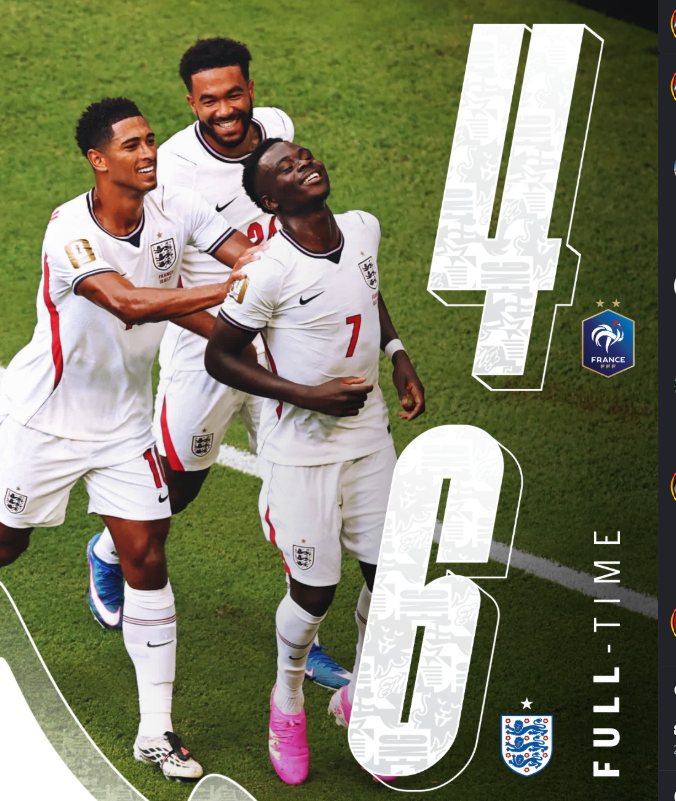
Saka then struck twice before half-time, giving England what appeared to be an unassailable 4-0 lead.
France, however, possessed too much talent to surrender quietly. Mbappé scored shortly after the restart, Barcola added another and Mbappé struck again to reduce the deficit to one.
With England suddenly under pressure, Saka converted an 87th-minute penalty to complete his hat-trick. Dembélé replied in stoppage time, but Bellingham scored England’s sixth moments later to end France’s comeback.
The ten-goal contest became the highest-scoring third-place play-off in World Cup history and delivered England’s first bronze medal at the competition.
Bukayo Saka Delivers a Career-Defining Hat-Trick
Saka’s hat-trick was the headline performance in an unforgettable match.
The Arsenal forward scored England’s third and fourth goals during a devastating first-half display before showing composure from the penalty spot when France threatened to complete an extraordinary comeback.
His performance demonstrated why he is so important to Tuchel’s plans. Saka offers direct running, intelligent movement, creativity and finishing ability from the right side of England’s attack.
More importantly, he delivered when the team needed a response following the semi-final disappointment.
Saka was named the official Player of the Match after becoming the driving force behind England’s bronze-medal victory.
Jude Bellingham Makes England World Cup History
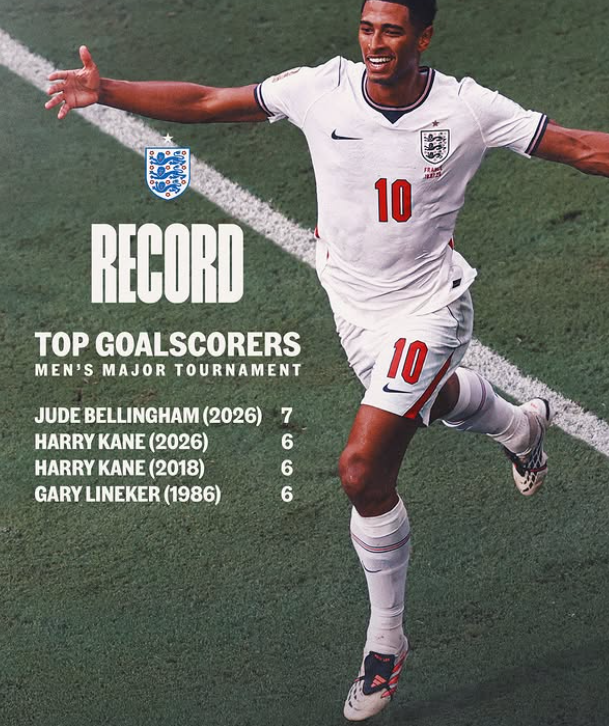
Bellingham’s stoppage-time goal was more than the final act of a ten-goal thriller. It took his tournament total to seven, setting a new England record for goals scored at a single major international tournament.
Before 2026, Harry Kane and Gary Lineker shared the benchmark of six goals at a World Cup. Bellingham went one better despite operating primarily as a midfielder.
His record underlined the completeness of his tournament. He was not only England’s creative leader but also one of their most reliable scorers.
Bellingham contributed crucial goals during the knockout rounds and continued making decisive runs into the penalty area. His performances showed that England no longer depend exclusively on a traditional centre-forward for goals.
The Real Madrid midfielder finished the competition with seven goals, while Kane scored six. England therefore became the first country to have two players reach at least six goals during the same World Cup.
Harry Kane Remains Central to England’s Progress
Although Kane did not take centre stage in the bronze-medal match, his contribution throughout the competition was essential to England’s run.
The captain scored six goals and provided experience during several demanding knockout fixtures. His movement, link-up play and leadership helped bring England’s attacking players into matches.
Kane also extended his position as England’s leading scorer in World Cup history. His tournament performances ensured that opponents could not concentrate solely on stopping Bellingham or Saka.
England’s attacking depth was perhaps the clearest sign of their improvement. Even when Kane was absent or tightly marked, Tuchel could turn to Saka, Bellingham, Rice and other players for decisive contributions.
Rice and Konsa Set the Tone Against France
England’s performance was not built only around their established attacking stars.
Rice opened the scoring with his first World Cup goal, driving England forward and finishing confidently from outside the penalty area. Wearing the captain’s armband, he gave the Three Lions the energetic start they needed.
Konsa then scored his first goal for England, converting from Rice’s delivery to establish a two-goal advantage inside 18 minutes.
Those contributions demonstrated England’s growing variety. Goals came from midfield, defence and attack rather than from one individual.
That balance will be important when Tuchel prepares his team for UEFA Euro 2028 and the 2030 World Cup.
England’s Road to the 2026 World Cup Bronze Medal
England’s progress to third place was built through a combination of attacking quality and mental strength.
The Three Lions topped Group L before facing a challenging knockout route. They defeated DR Congo in the Round of 32, overcame Mexico in the Round of 16 and edged Norway after extra time in the quarter-finals.
Their semi-final against Argentina ended in heartbreak. England had been close to reaching their first World Cup final since 1966, but a late Argentine winner turned a promising campaign into disappointment.
The response mattered.
England could have approached the bronze final without urgency, but they instead scored four first-half goals against one of the tournament’s strongest teams. FIFA’s final standings placed England third, confirming their best World Cup finish since winning the tournament in 1966.
Why the Bronze Medal Represents Genuine Progress
England have produced talented squads before, but recent generations have often been judged by their inability to deliver in decisive moments.
The 2026 campaign offered several reasons to believe this team is different.
England found goals across the squad
Kane and Bellingham scored a combined 13 goals, while Saka completed the tournament with a spectacular hat-trick. Rice and Konsa also contributed in the bronze final.
That attacking diversity makes England less predictable and more difficult to contain.
The Three Lions responded to adversity
England survived difficult knockout matches and recovered from their semi-final defeat by producing six goals against France.
Their ability to react positively after disappointment suggests that Tuchel has developed a stronger competitive mentality.
Young leaders emerged
Bellingham and Saka are already experienced at the highest level, but both remain capable of improving further.
Alongside Rice, they provide England with a core that can remain together through Euro 2028 and the 2030 World Cup.
England won a medal outside their home country
England’s 1966 World Cup triumph remains their only major international title. Securing third place in 2026 represented their first World Cup medal earned outside England, adding historical importance to the achievement.
Thomas Tuchel Has Built a Serious Tournament Team
Tuchel was appointed with the clear objective of turning England’s talented generation into winners.
The World Cup ended without the trophy he wanted, and questions will remain over some of his decisions during the semi-final defeat to Argentina. However, reaching the last four and then defeating France represented a strong foundation.
England appeared tactically adaptable throughout the competition. They could dominate possession, attack quickly in transition and survive extended periods of pressure.
Tuchel also showed that he was willing to give important responsibilities to different players rather than building the entire system around one star.
After the bronze-medal victory, the coach praised the squad’s development and resilience while acknowledging that finishing third remained painful because England had arrived with ambitions of winning the tournament.
Mbappé and France Make History Despite Defeat
France’s fourth-place finish should not overshadow the extraordinary individual achievements produced by their leading players.
Mbappé scored twice against England and finished the tournament with ten goals. His second strike took him to 22 career World Cup goals, making him the competition’s all-time leading scorer.
Michael Olise was another major creative influence for France. He completed the tournament with seven assists, establishing a new record for assists at a single World Cup.
Nevertheless, France’s disastrous first half against England left them with too much work to do. Their four second-half goals made the contest unforgettable, but Saka’s penalty and Bellingham’s late finish prevented a complete comeback.
England Can Target Euro 2028 and the 2030 World Cup
The next challenge is turning progress into silverware.
England will be among the leading contenders at Euro 2028, a tournament they will partly host alongside Scotland, Wales, Northern Ireland and the Republic of Ireland.
Home support will increase expectations, but the 2026 World Cup showed that England possess the talent required to handle major occasions.
By the 2030 World Cup, players such as Bellingham and Saka should be entering the prime years of their careers. Rice will remain an important leader, while younger prospects will have opportunities to strengthen the squad.
Kane’s future will require careful management as he grows older, but England have already shown that goals can come from multiple positions.
The foundation is therefore stronger than the bronze medal alone suggests.
What England Must Improve Before Euro 2028
England’s campaign was impressive, but it was not perfect.
Conceding four times after leading France 4-0 demonstrated that greater control will be required against elite opponents. Tuchel must develop a team capable of slowing matches down without becoming overly defensive.
England must also learn how to manage the final stages of major semi-finals. Their defeat to Argentina proved that small tactical decisions can separate finalists from eliminated teams.
The next phase of development should focus on game management, defensive concentration and maintaining attacking ambition under pressure.
Conclusion
England’s World Cup bronze medal was not the prize the Three Lions originally wanted, but it remains a significant achievement.
Their 6-4 victory over France captured everything encouraging about this generation: courage, attacking quality, resilience and an ability to produce decisive moments through several different players.
Saka’s hat-trick, Bellingham’s record seventh goal, Kane’s six-goal campaign and the breakthrough contributions of Rice and Konsa demonstrated the depth available to Tuchel.
Finishing third confirmed England’s best World Cup performance since 1966. More importantly, it showed that the Three Lions are again capable of challenging the strongest international teams.
England did not return home as world champions, but they returned with a medal—and credible reasons to believe that Euro 2028 and the 2030 World Cup could deliver something even greater.
Frequently Asked Questions
What position did England finish at the 2026 World Cup?
England finished third after defeating France 6-4 in the bronze-medal play-off.
Who scored England’s goals against France?
Declan Rice and Ezri Konsa scored once each, Bukayo Saka completed a hat-trick, and Jude Bellingham added England’s sixth goal.
How many goals did Jude Bellingham score at the 2026 World Cup?
Bellingham scored seven goals, the highest total recorded by an England player at a single major tournament.
How many goals did Harry Kane score?
Kane scored six goals during England’s run to the World Cup semi-finals and bronze medal.
Why is England’s bronze medal important?
It was England’s best World Cup finish since winning the competition in 1966 and their first World Cup medal secured outside their home country.